DITA Mach-One Review (2026): The Luxury Aviator Sunglasses Worth the Investment?
Few names in luxury eyewear generate as much genuine debate as DITA Mach-One. Ask ten collectors whether a titanium aviator frame is worth close to $800, and you'll get ten different answers rooted in taste, budget, and what "luxury" actually means to them. This guide skips the marketing fluff and gets into the specifics: the history behind the silhouette, the Japanese manufacturing process that separates DITA from mass-produced eyewear, how the Mach-One actually performs on the face, and how it stacks up against Cartier, Chrome Hearts, Maybach, Gucci, and Ray-Ban. If you're trying to decide whether to add a pair to your collection, everything you need is below.
 The History of DITA Eyewear
DITA Eyewear was founded in Los Angeles in 1995 by brothers John and Emil Juszczyk, at a moment when eyewear was still overwhelmingly treated as a commodity accessory rather than a considered piece of design. Their bet was that sunglasses could be engineered with the same obsessiveness as a fine watch or a tailored jacket, built to be worn for a decade rather than replaced every summer. That philosophy is baked into the brand name itself: DITA references discipline and precision in Sanskrit-derived terminology, a nod to the meticulous process behind every frame.
Over the following three decades, DITA carved out a lane that few competitors have matched: a full commitment to Japanese manufacturing, working with the same specialist factories in the Sabae region that supply parts of the watch and precision-instrument industries. Sabae has been a center of eyewear-making for more than a century, and DITA's decision to build there from day one — instead of outsourcing to lower-cost regions as most fashion-eyewear brands do — is the single biggest reason the brand's frames feel and perform differently in hand.
Today, DITA sells through a tightly controlled network of authorized boutiques and department stores rather than mass retail, which keeps supply intentionally limited and protects resale value. Lexor Miami is one of the retailers in that authorized network, meaning every pair sold carries full manufacturer backing, an authentic case, and the paperwork that separates a genuine DITA frame from the counterfeits that circulate online.
The Story Behind the Mach-One
The Mach-One is arguably the single frame most responsible for cementing DITA's reputation. Introduced as part of the brand's ongoing tribute to speed, precision engineering, and the golden age of aviation and motorsport, the Mach-One channels the same design instincts that shaped classic cockpit instrumentation and vintage racing gear: functional lines, mechanical hardware left visible rather than hidden, and a silhouette built for movement rather than for sitting still on a shelf.
DITA has been explicit about this inspiration since the brand's earliest catalogs: the international circuit of nautical, automotive, and aviation design, and the individuals who pushed the limits of those finely engineered machines. The Mach-One takes that ethos and translates it directly into a navigator-style aviator frame that has since become one of the most recognized silhouettes in modern luxury eyewear, worn everywhere from red carpets to boardrooms to airport lounges.
Part of what has kept the Mach-One relevant well over a decade after its debut is that DITA hasn't chased trends with it. Instead, the brand has released the shape in a rotating set of finishes and color combinations, letting the frame's engineering do the talking while giving collectors a reason to return for a specific colorway. Not every colorway stays in production — the DRX-2030-G-BLK-18K-59-Z finish, for instance, has since been retired from Lexor Miami's active catalog — which is part of why current, in-stock references matter as much as the shape itself when you're actually ready to buy. The two current-production models available through Lexor Miami — the DRX-2030-E-BLK-SLV-59-Z and the DRX-2030B-59-Z — are both part of that ongoing lineage, sharing the same core architecture with different metal and acetate treatments.
 Design & Silhouette
The Mach-One follows a navigator-aviator hybrid shape: a slightly squared-off lens outline that keeps the classic teardrop DNA of an aviator while giving the frame a more architectural, less "flight-instructor" feel than a traditional round or teardrop pilot style. The double bridge is a signature touch, echoing the structural bridges found on vintage aviation eyewear while doing real mechanical work — reinforcing the frame front and distributing weight evenly across the nose.
What immediately sets the Mach-One apart on close inspection is the visible hardware. Where most fashion sunglasses hide their hinges and screws under acetate or plastic housings, DITA leaves the mechanical construction exposed as a design feature. The hex screw hinges, in particular, function almost like the exposed movement of a skeleton watch: a deliberate statement that nothing is being hidden because everything is built to be seen.
The temple line carries acetate tips that transition cleanly from the titanium front, softening the point of contact behind the ear while keeping the overall frame lightweight. It's a detail-obsessed design in the truest sense — nothing about the Mach-One is accidental, from the width of the double nylor bridge detail to the precise radius of the lens curve.
Materials & Titanium Construction
Both current Mach-One models built for Lexor Miami share the same premium materials specification:
- Titanium front frame with acetate lens rim detailing for structural rigidity and a fraction of the weight of steel or standard metal alloys
- Double nylor bridge detail, a construction method borrowed from performance eyewear that keeps the lenses secure without visible screws at the rim
- Titanium nose pads, hypoallergenic and shaped for extended, fatigue-free wear
- DITA's signature hex screw hinges, hand-fitted rather than machine-stamped
- Acetate temple tips for a warmer point of contact against the skin
- 100% UVA and UVB protection with anti-reflective lens coating
Titanium is the material choice that does the most heavy lifting here. It's roughly 45% lighter than standard eyewear-grade steel, highly resistant to corrosion (including sweat and saltwater exposure, relevant for a Miami-based customer base), and largely immune to the kind of metal fatigue that causes cheaper frames to loosen or snap at the hinge after a year or two of daily wear. It's also more expensive to machine than acetate or standard alloy, which is part of why titanium-heavy frames like the Mach-One sit at a higher price point than typical designer sunglasses.
If you want to see the same materials philosophy pushed even further, DITA's Hyperlux-1000 line is worth a look — a more technical, two-piece titanium brow-bar construction built for buyers who want the engineering-forward aesthetic in an even more minimal frame.
Why Titanium Matters
A steel or standard-alloy frame in this shape would weigh noticeably more and be more prone to corroding at the hinge screws over time — especially in a humid, coastal climate like South Florida. Titanium sidesteps both issues while holding its shape better through repeated folding and unfolding.
Japanese Craftsmanship
Every Mach-One frame is made in Japan, and that's not a marketing footnote — it's the core of DITA's value proposition. DITA's production runs through specialist workshops that can involve more than 300 individual manufacturing steps per frame, spread across a process that can take several months from raw material to finished product. That's a dramatically different model from the injection-molded, mass-produced approach used by most fashion-house eyewear, where a single frame can be assembled in a fraction of the time using far fewer hand-finished components.
Sabae's artisans specialize in techniques like hand-polishing metal joints to a mirror finish, precisely calibrating hinge tension so a frame opens and closes with consistent resistance for years, and fitting acetate to metal with tolerances tight enough that the seams are nearly invisible. This is the same regional expertise that supplies precision components to Japan's watchmaking and instrument industries, and it shows up in the way a Mach-One frame feels solid and cohesive rather than like separate parts glued together.
For a buyer, this manufacturing depth translates into two very practical benefits: a frame that holds its alignment and hinge tension far longer than mass-produced alternatives, and a level of finish — smooth edges, flush rivets, consistent color saturation on the acetate — that's immediately obvious under close inspection, even to someone who isn't an eyewear expert.
 Technology & Lens Engineering
The optical side of the Mach-One is built to match the frame engineering. Every current pair ships with 100% UVA and UVB protective lenses finished with an anti-reflective coating on the back surface, which cuts down on the internal glare and ghosting that cheaper sunglasses often produce when light hits the lens at an angle — a genuinely useful feature for driving into low sun or walking along a bright waterfront.
The hex screw hinge system isn't purely cosmetic engineering either: it allows for more precise tensioning than a standard spring hinge, meaning the temples hold their angle consistently through thousands of open-close cycles rather than gradually loosening, which is the most common failure point on lower-quality sunglasses.
Fit & Comfort
At a 59mm lens width, the Mach-One reads as a medium-to-large frame, sitting comfortably on medium and wider face shapes without overwhelming narrower faces thanks to the relatively slim titanium construction. The titanium nose pads are individually adjustable by an optician, which means the fit can be dialed in for anyone from a narrow to a broad nose bridge rather than relying on a single fixed molded piece, as most acetate-only sunglasses do.
Weight is where the titanium construction earns its keep most obviously. Because the frame front and temples are built from titanium rather than solid acetate or standard metal, the Mach-One sits noticeably lighter on the face than its bold visual presence would suggest — a detail that matters over a full day of wear, whether that's a flight, a day of driving, or a long dinner outdoors.
Optical Quality
Beyond UV protection and anti-reflective coating, what buyers notice most in daily use is lens clarity and color accuracy. Higher-end gradient tints, like the tones used across the Mach-One range, are calibrated to reduce distortion at the edges of the lens — a common weak point on cheaper gradient sunglasses, where peripheral vision can look slightly warped or discolored. DITA's lens suppliers are held to the same precision standard as the frame manufacturing, which is part of why the brand is frequently recommended by opticians for both fashion and functional wear, not just as a style statement.
Durability & Longevity
Titanium construction, hand-fitted hex hinges, and Sabae-level finishing all point toward the same outcome: a frame designed to be worn daily for years, not seasons. Titanium resists the corrosion that eventually causes lower-quality metal frames to develop a green tint or seize at the hinge, especially relevant in a humid, salt-air environment like Miami. The acetate used at the temple tips and lens rim detailing is also higher grade than what's typical in fast-fashion eyewear, meaning it's less prone to the fading, warping, or cracking that can show up after a year or two of sun and heat exposure.
Because DITA frames are sold through a controlled authorized network rather than mass retail, replacement parts, adjustments, and warranty service also remain available in a way that's not guaranteed with frames purchased through gray-market or unauthorized sellers — another reason authenticity and dealer sourcing matter as much as the frame itself.
 Is the DITA Mach-One Worth It?
At $795, the Mach-One sits in a specific position in the luxury eyewear market: meaningfully more expensive than mainstream designer sunglasses (Ray-Ban, Persol, most Gucci styles), but positioned below the ultra-high end occupied by brands built around precious-metal branding like Cartier or heavily customized, limited-production eyewear like Chrome Hearts.
What you're paying for isn't a logo. It's titanium construction machined and finished by specialists, a manufacturing process built around hundreds of hand-executed steps rather than injection molding, and a design that has held its relevance for well over a decade without needing seasonal reinvention. For someone who wears sunglasses daily — driving, working outdoors, traveling — that combination of durability and design longevity tends to make the cost-per-wear math work out favorably compared to replacing a $150–$250 pair of designer sunglasses every year or two as the hinges loosen or the coating wears off.
Where the value proposition gets more personal is aesthetic fit. The Mach-One's visible-hardware, mechanical-engineering aesthetic is distinct — it won't appeal to everyone the way a minimalist Persol or a classic Ray-Ban Aviator does. Buyers who gravitate toward it tend to already value that same design language in other categories: mechanical watches, performance cars, tailored technical outerwear.
How the DITA Mach-One Compares
To put the Mach-One's positioning in context, here's how it stacks up against the other names most frequently mentioned in the same breath — Cartier, Chrome Hearts, Maybach, Gucci, and Ray-Ban.
| Brand & Model | Approx. Price | Primary Material | Manufacturing | Design Language |
|---|---|---|---|---|
| DITA Mach-One | $795 | Titanium + acetate | Hand-finished, made in Japan (Sabae) | Mechanical, aviation-inspired, visible hardware |
| Cartier (Santos / Panthère lines) | $700–$2,000+ | Metal, precious-metal finishes | French maison manufacturing | Refined, jewelry-inspired, understated branding |
| Chrome Hearts | $1,200–$3,000+ | Sterling silver, acetate | Hand-carved, limited production | Gothic, ornate, heavily customized hardware |
| Maybach | $1,500–$4,000+ | Precious metals, exotic finishes | Ultra-limited European production | Maximalist, automotive-luxury branding |
| Gucci | $300–$600 | Acetate, standard metal alloys | Mass-produced, Italy/EU factories | Fashion-forward, logo-driven, trend cycles |
| Ray-Ban Aviator (standard) | $180–$260 | Standard metal alloy | Mass-produced | Classic, minimalist, widely accessible |
DITA Mach-One vs. Cartier
Cartier eyewear leans on the house's jewelry-making heritage, favoring precious-metal finishes and restrained branding drawn from pieces like the Santos and Panthère collections. It's the more "quiet luxury" choice. The Mach-One, by contrast, wears its engineering openly — visible hex screws and structural bridging rather than polished minimalism. Both are built to comparable durability standards; the choice mostly comes down to whether you want eyewear that reads as refined jewelry or as precision mechanical hardware.
DITA Mach-One vs. Chrome Hearts
Chrome Hearts sits meaningfully higher on price and leans into a maximalist, hand-carved silver aesthetic with heavy ornamentation. It's a strong choice for buyers who want their eyewear to be an unmistakable statement piece. The Mach-One is the more versatile daily-wear option: lighter, less visually loud, and easier to pair with a wider range of everyday outfits without dominating the look.
DITA Mach-One vs. Maybach
Maybach eyewear is positioned at the very top of the market, built around exotic materials and ultra-limited runs that mirror the brand's automotive positioning. It's a niche, collector-driven category. The Mach-One offers a comparable engineering mindset — precision, materials-first design — at roughly a third to a fifth of the entry price, making it the far more accessible way into that same design philosophy.
DITA Mach-One vs. Gucci
Gucci sunglasses are built on a fashion-house model: faster design cycles, acetate-heavy construction, and pricing that reflects brand recognition more than manufacturing depth. The Mach-One's titanium build and Japanese hand-finishing put it in a different durability tier entirely — it's designed to outlast several Gucci seasonal releases, which matters if you're thinking about cost per year of wear rather than just sticker price.
DITA Mach-One vs. Ray-Ban
Ray-Ban's classic Aviator remains the benchmark for accessible, mass-produced pilot-style sunglasses, and it's a genuinely good product at its price point. The gap with the Mach-One is almost entirely about materials and manufacturing depth: standard metal alloy and factory assembly versus titanium and thirty-plus artisan production steps. If budget is the primary constraint, Ray-Ban remains a smart choice. If you're specifically looking for a luxury aviator built to a materially higher standard, the Mach-One is the upgrade path.
Pros & Cons
✓ Pros
- Titanium construction is significantly lighter and more corrosion-resistant than standard alloy frames
- Made in Japan with hundreds of hand-finished manufacturing steps
- Adjustable titanium nose pads for a customized fit
- Visible hex-screw hardware gives the frame a distinct mechanical aesthetic
- 100% UVA/UVB protection with anti-reflective coating
- Iconic, long-running silhouette that hasn't needed seasonal reinvention
- Backed by full manufacturer warranty when purchased through an authorized dealer
✗ Cons
- Higher price point than mainstream designer sunglasses
- Bold, hardware-forward design won't suit buyers who prefer minimalist frames
- Limited production means specific colorways can sell out and not be restocked
- Requires purchase through an authorized dealer to guarantee authenticity and warranty coverage
The Mach-One Models Available at Lexor Miami
Lexor Miami currently carries two authentic, in-stock DITA Sunglasses Mach-One colorways, both unisex and both backed by full manufacturer authentication. A third colorway, the DRX-2030-G-BLK-18K-59-Z, was part of an earlier release but is no longer available in Lexor Miami's active catalog.

DITA Mach-One DRX-2030-E-BLK-SLV-59-Z
$795.00
- SKUDRX-2030-E-BLK-SLV-59-Z
- UPC0812271025152
- Lens Width59mm
- FrameTitanium front, acetate rim detail
This colorway pairs a matte black titanium front with silver hardware detailing, giving the mechanical hex-screw hinges extra visual contrast against the frame. It's the more understated of the two current finishes — closer to a tool-watch aesthetic than a statement piece.
Shop DITA Mach-One DRX-2030-E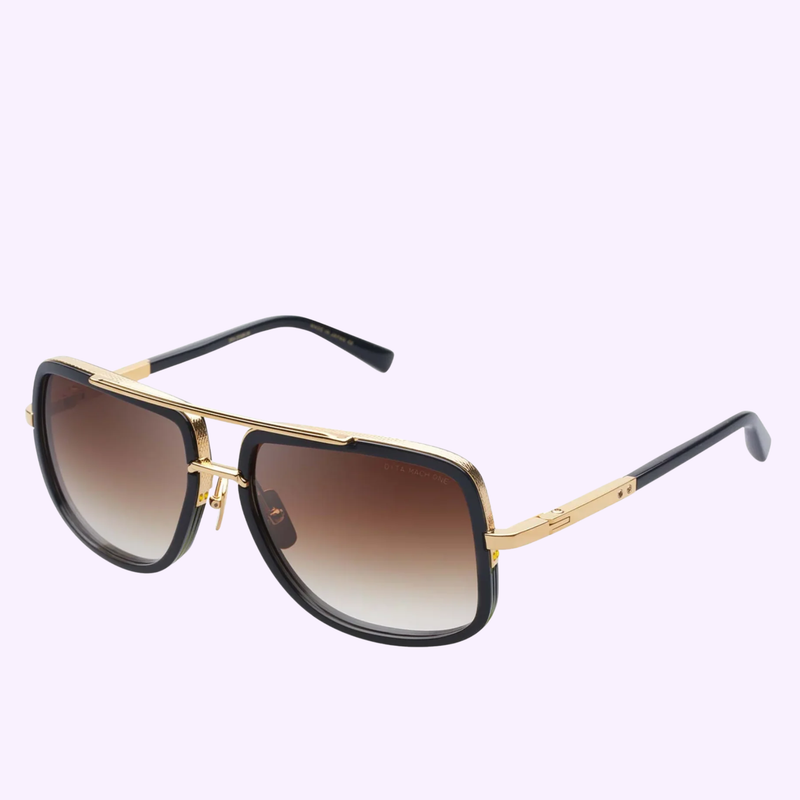
DITA Mach-One DRX-2030B-59-Z
$795.00
- SKUDRX-2030B-59-Z
- UPC0812271025145
- Lens Width59mm
- FrameTitanium front, acetate rim detail
The DRX-2030B colorway is the model most frequently featured across Lexor Miami's own DITA editorial content — including the brand's DITA blog feature — prized for how the tonal finish lets the frame's structural details read as the main event rather than competing with a high-contrast color scheme.
Shop DITA Mach-One DRX-2030BPrefer a heart-shaped take on the same DNA? The DITA MACH-X reinterprets the Mach-One's engineering-first aesthetic for a more feminine silhouette, while still built from the same titanium-and-acetate construction. Want something even more minimal and technical? Browse the DITA Hyperlux-1000 line, DITA's two-piece titanium brow-bar frames. Men's and women's shoppers alike browsing Luxury Sunglasses at Lexor Miami — including Men's DITA Sunglasses and Women's DITA Sunglasses — will find the full current Mach Series lineup, along with DITA's other signature collections, sized and finished for every face shape.
Buying Tip
Always confirm you're purchasing from an authorized DITA dealer. Lexor Miami is an official authorized dealer, and every Mach-One sold ships with an original case, cleaning cloth, and manufacturer paperwork — the documentation that protects both authenticity and warranty coverage, and that counterfeit or gray-market sellers can't provide.
Frequently Asked Questions
Are DITA Mach-One sunglasses worth it?
For daily wearers who value materials and manufacturing depth over logo recognition, yes. The titanium construction and Japanese hand-finishing process give the Mach-One a durability and finish quality that mass-produced designer sunglasses in the $200–$300 range can't match, which tends to make the cost per year of ownership comparable or better over time.
Why are DITA sunglasses so expensive?
The price reflects the manufacturing process rather than branding alone. DITA frames are made in Japan through a process that can involve more than 300 individual hand-executed steps, using titanium construction that's more costly to machine than standard alloy or acetate. That combination of premium materials and labor-intensive finishing is the primary driver of the price, not marketing spend.
What makes the Mach-One different from other DITA styles?
The Mach-One is DITA's flagship tribute to aviation and motorsport design, defined by its navigator-aviator silhouette, double bridge, and fully exposed hex-screw hardware. It's the model most associated with the brand's engineering-first identity, and one of the longest-running shapes in the current DITA lineup.
Is the DITA Mach-One unisex?
Yes. Both the DRX-2030-E-BLK-SLV-59-Z and DRX-2030B-59-Z are designed and sized as unisex frames, with a 59mm lens width that fits a broad range of face sizes.
What is the Mach-One frame made from?
The frame front is titanium with acetate lens rim detailing, titanium nose pads, and acetate temple tips. Lenses carry 100% UVA/UVB protection with an anti-reflective coating.
Where are DITA sunglasses manufactured?
DITA manufactures its eyewear in Japan, primarily through specialist workshops in the Sabae region — an area with more than a century of precision eyewear-making expertise.
How do I know if my DITA sunglasses are authentic?
Purchase only from an authorized DITA dealer, like Lexor Miami. Authentic pairs ship with an original DITA case, a cleaning cloth, and manufacturer documentation. Verify the dealer against DITA's official store locator if you're ever uncertain.
How does the DITA Mach-One compare to Cartier sunglasses?
Cartier leans toward a refined, jewelry-inspired aesthetic with restrained branding, while the Mach-One embraces visible mechanical hardware as its defining design language. Both use premium materials and comparable manufacturing standards; the decision mostly comes down to design preference.
Is the DITA Mach-One better than Chrome Hearts sunglasses?
"Better" depends on the buyer. Chrome Hearts sits at a higher price point with a more maximalist, hand-carved silver aesthetic built for statement wear. The Mach-One is lighter, more versatile for daily use, and priced more accessibly while still delivering premium titanium construction.
Can prescription lenses be fitted to the DITA Mach-One?
Many DITA Mach-One styles can be fitted with prescription lenses through an optician, depending on the specific frame and lens curvature. Contact Lexor Miami directly to confirm compatibility for a specific SKU before ordering.
What face shapes suit the DITA Mach-One?
The navigator-aviator shape flatters most face shapes, particularly oval, square, and heart-shaped faces. Because the frame is titanium rather than heavy acetate, it also stays proportionate on narrower faces that might otherwise be overwhelmed by a bold aviator silhouette.
How should I clean and maintain titanium DITA sunglasses?
Use the included microfiber cloth and avoid household glass cleaners, which can degrade anti-reflective lens coatings over time. Rinse with lukewarm water if the frame is exposed to salt water or heavy sweat, and store in the original case when not in use to protect the hinges and lenses.
Ready to Experience the DITA Mach-One?
Explore the full DITA collection at Lexor Miami, Miami's authorized DITA dealer, and shop both current Mach-One colorways online or in our Miami showroom.
Final Verdict
The DITA Mach-One earns its reputation the way most enduring luxury products do: not through aggressive branding, but through material choices and manufacturing depth that hold up to close inspection years after purchase. Titanium construction, Japanese hand-finishing, and a silhouette borrowed from aviation and motorsport design come together in a frame that's built to be worn, not just displayed. Whether it's the right choice over Cartier, Chrome Hearts, Maybach, Gucci, or Ray-Ban ultimately comes down to how much you value that engineering-first aesthetic versus a more minimalist or maximalist alternative — but on pure construction quality relative to price, the Mach-One remains one of the strongest arguments in luxury eyewear for buying once and wearing for years. For anyone ready to see the craftsmanship in person, both current colorways are in stock and authenticated at Lexor Miami.
Product specifications, pricing, and images verified directly from lexormiami.com at the time of publication. Pricing and availability are subject to change; confirm current details on the product page before purchase.


